January 30–31, 2027
9:00 AM–6:00 PM both days
Arizona Tactical Adventures
Tuition: $600
12 Student Maximum
IMPORTANT: STUDENT REQUIREMENTS
This is a physically active, hands-on, scenario-based course. Students must be prepared to lift and carry another adult, sprint, run, make rapid changes in direction, and operate in dimly lit training environments.
United States citizenship is required to attend this course.
Students must also be capable of safely participating in physically demanding training for extended periods of time.
NO LIVE WEAPONS ARE PERMITTED. Unit Solutions will provide training rifles, handguns, and ammunition.
DESCRIPTION
This two-day Tactical Emergency Casualty Care (TECC) course teaches students how to respond to and manage traumatic injuries in high-threat environments, including incidents involving one or multiple casualties.
Instruction incorporates updated 2026 TECC guidelines and trauma care principles, emphasizing the application of medical skills in realistic, dynamic environments. Students will work through both individual and team-based casualty scenarios, developing the ability to assess, treat, communicate, and evacuate injured personnel while operating under stress.
The course combines classroom instruction, hands-on medical skills, scenario-based training, active shooter response, and CQB fundamentals.
Medical instruction will focus on recognizing and managing life-threatening injuries and applying TECC principles in practice. Students will perform trauma assessments using the NREMT trauma patient assessment framework and develop treatment priorities based on the patient’s presentation and environment.
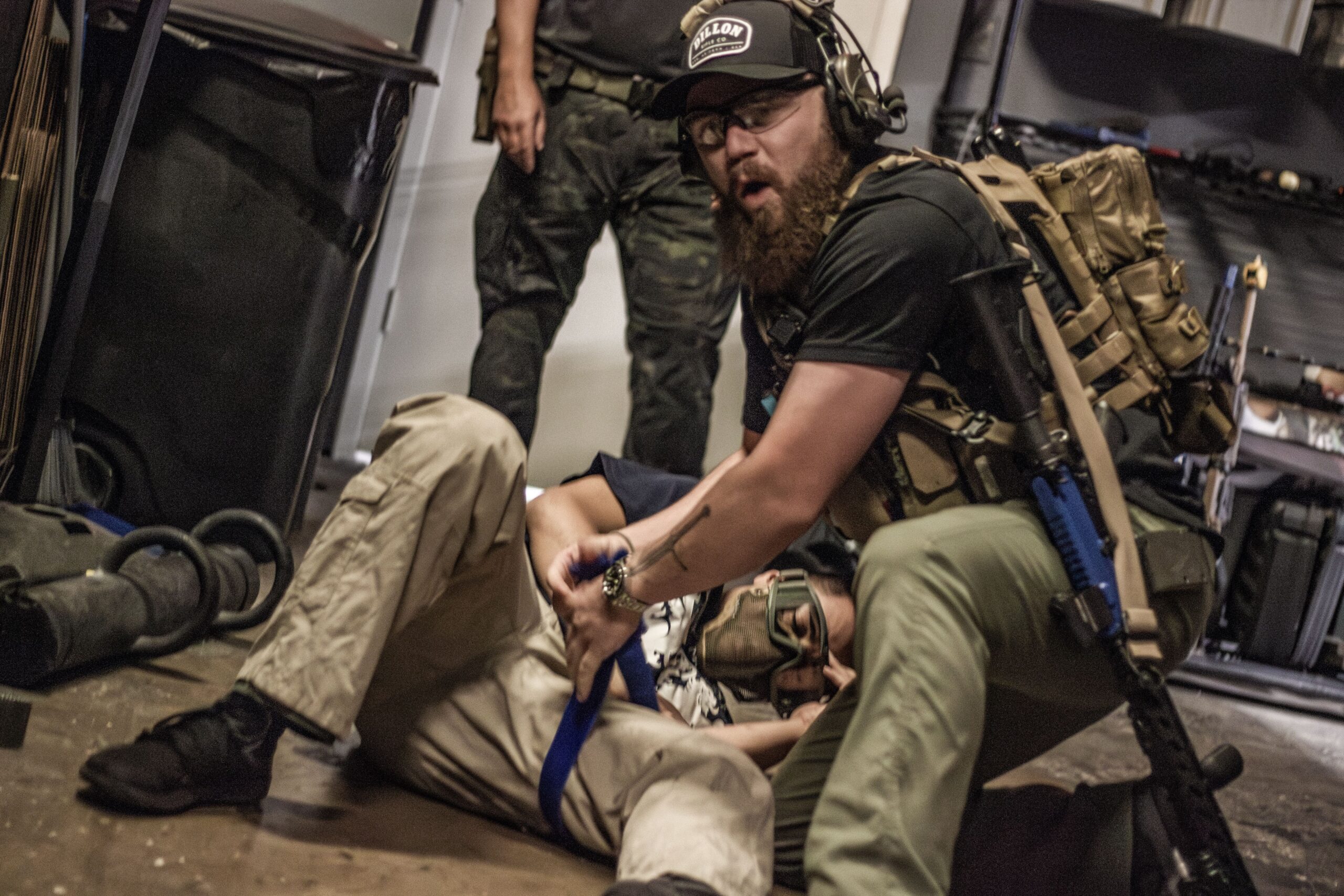
Students will work through scenarios involving themselves and other casualties, including immediate lifesaving interventions, airway management, breathing and ventilation considerations, hemorrhage control, shock management, casualty movement, and evacuation procedures.
The active shooter component introduces students to the fundamentals of responding to an active threat while simultaneously managing medical problems. Students will learn how to operate individually and as part of a team while balancing threat response, casualty care, communication, and movement.
This portion of the course includes force-on-paper and force-on-role-player scenarios, allowing students to progressively apply the concepts before transitioning into more dynamic training environments. Professional role players and special effects equipment will be utilized to create realistic scenario conditions.
Students will also be introduced to fundamental CQB concepts related to active threat response and casualty management. The emphasis is on understanding how medical care integrates with movement, communication, team operations, and the changing environment.
TOPICS COVERED
TECC / Trauma Care
- 2026 updated TECC guidelines and concepts
- Tactical trauma care principles
- Responding to one or multiple casualties
- NREMT trauma patient assessment
- Massive hemorrhage recognition and control
- Airway assessment and management
- Breathing assessment and management
- Recognition of life-threatening chest injuries
- When to initiate CPR
- Shock recognition and management
- Patient monitoring and reassessment
- Casualty movement and evacuation
- Communication during casualty care
- Solo casualty care
- Team-based casualty care
Active Shooter / CQB Response
- Active shooter response fundamentals
- Individual response considerations
- Team-based response considerations
- Movement and communication
- Threat response and casualty care integration
- Treating yourself during an active shooting incident
- Treating other casualties during an active shooting incident
- Force on paper scenarios
- Force-on-role-player scenarios
- Scenario-based decision making
- Working through dynamic casualty situations
- Solo and team-based scenarios
SCENARIO BASED TRAINING
A significant portion of the course will be dedicated to practical application.
Students will progress from individual skills into increasingly complex scenarios involving casualties, active threats, movement, communication, and medical decision-making.
Professional role players and special effects equipment will be utilized throughout applicable scenarios to create realistic training conditions.
REQUIRED EQUIPMENT
Students are required to bring:
- Eye protection
- Electronic hearing protection
- Water
- Food and snacks
- Note-taking material
- Appropriate clothing for outdoor training and weather conditions
Students should arrive prepared for extended periods of standing, walking, movement, practical medical skills, and scenario-based training.
PROHIBITED EQUIPMENT
NO LIVE WEAPONS ARE PERMITTED
Students are prohibited from bringing:
- Live firearms
- Live ammunition
- Knives
- Tasers
- Other weapons
Unit Solutions will provide training weapons and ammunition.
IMPORTANT INFORMATION
This is a two-day, scenario-driven course running from 9:00 AM to 6:00 PM each day, with a one-hour lunch period.
The course has been expanded by approximately two hours compared to the previous iteration, providing additional time for practical exercises and scenario-based training.
The course is limited to 12 students to maintain an appropriate student-to-instructor ratio and allow sufficient time for individual and team scenario work.
Students must meet all citizenship, physical, and visual requirements listed above before registering.
No refunds or class credits will be issued for students who cannot attend.